
WELCOME BONUS 300%
UP TO €2000 + 100
FREE SPINS
UP TO €2000 + 100
FREE SPINS
Home → Blackjack
Blackjack at Luckywins: Variants, Rules and Payouts
Register Late Surrender correctly in three steps
The Late Surrender rule in Blackjack Liberal Vegas Strip allows a player to forfeit their hand after the dealer checks for blackjack. This rule offers a significant RTP improvement, potentially by as much as 0.08 percentage points, by reducing the house edge. When opting for Late Surrender, the player loses only half of their original bet, providing a strategic escape route.
This rule is distinct from Early Surrender, which is much rarer but offers a greater RTP benefit of up to 0.6 percentage points. The Blackjack Liberal Vegas Strip table specifies a 3:2 payout for a natural blackjack, with a standard deviation of 1.15. The house advantage on this particular variant is a mere 0.28%.
Understanding this rule is crucial for players aiming to optimize their return to player. It is one of several factors contributing to the Blackjack Liberal Vegas Strip's favourable RTP of 99.72%. The ability to surrender under specific circumstances is a key element for players employing advanced strategies.
Place Side Bet before cards are dealt
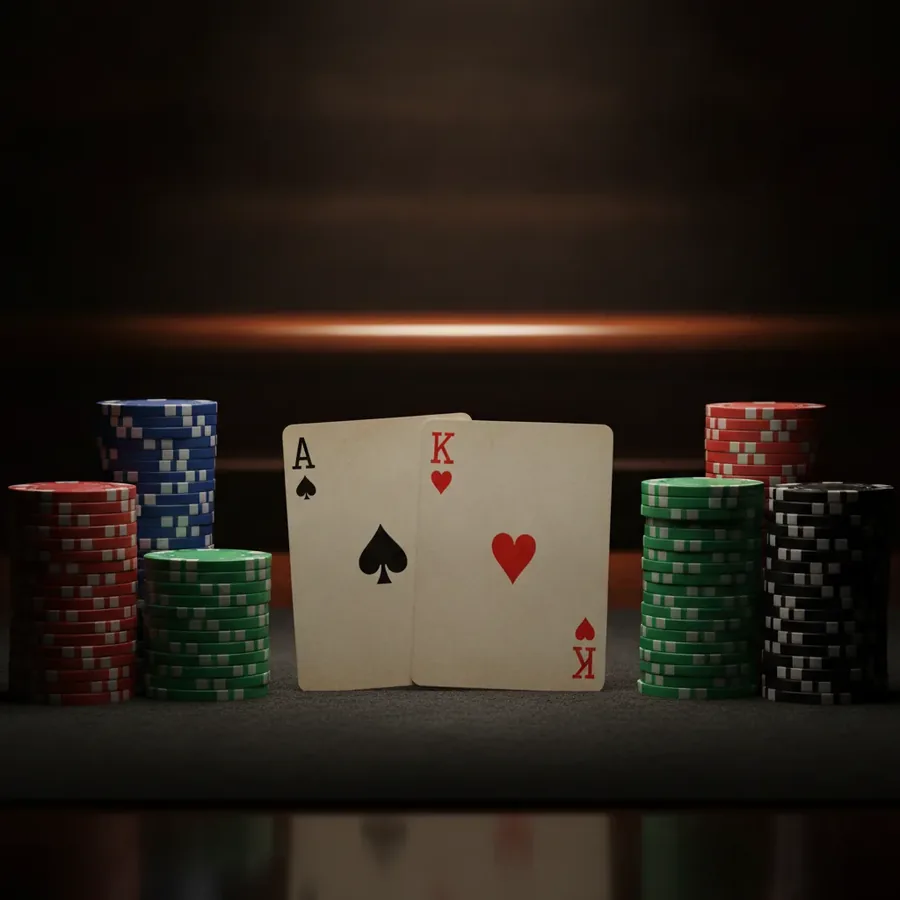
Side bets in online blackjack, such as those available on Infinite Blackjack, are placed before the initial two cards are dealt to the player. These bets offer additional wagering opportunities beyond the standard game, with examples including Any Pair, 21+3, Hot 3, and Bust It. The RTP for Infinite Blackjack itself is 99.47% with optimal strategy.
For instance, the Blackjack Insurance side bet, available in variations like Blackjack Insurance (6-8 decks), pays 2:1 but carries a significant house edge of 7.47%, leading to a theoretical RTP of 92.53%. The basis strategy for this specific side bet dictates always declining it, unless card counting indicates a true count of +3 or higher.
These side bets can significantly alter the overall risk and potential payout of a blackjack session. Quantum Blackjack Plus Live, for example, features Quantum multipliers up to 1,000x on specific combinations. Players should be aware of the distinct RTPs and house edges associated with each side bet offered.
Highroller from 500 EUR per hand
Certain blackjack tables cater to high rollers with elevated betting limits, such as the option to wager from 500 EUR per hand. This is exemplified in tables like Quantum Blackjack Plus Live, which accepts stakes ranging from 1 EUR to 5,000 EUR. Such limits allow for significant stakes within a single round of play.
Infinite Blackjack also accommodates high rollers with a betting range extending up to 5,000 EUR per hand, offering unlimited player seats at the table. This high-stakes environment is suitable for players who prefer to make substantial wagers during their gaming sessions. The game features a 99.47% RTP.
The welcome bonus offers a substantial boost, with a 300% welcome bonus up to €2,000 plus 100 free spins. While table games contribute 10% to bonus turnover, slots contribute 100%. This structure means high-stakes blackjack play will contribute less towards wagering requirements compared to slot play.
RNG draws cards from virtual eight-deck shoe
Many online blackjack variants utilize a virtual shoe composed of eight decks, as is common in standard blackjack. For instance, a Blackjack variation with 6 decks, S17, DAS, DOA, and a 3:2 payout has an RTP of 99.54% and a house edge of 0.46%. The number of decks directly impacts the house edge.
Reducing the number of decks can decrease the house edge; a single deck blackjack with classic rules and 3:2 payout boasts an impressive RTP of 99.85% with a house advantage of only 0.15%. This is a reduction of approximately 0.48 percentage points compared to an eight-deck game.
However, online casinos often compensate for the lower house edge of fewer decks by adjusting payouts, such as offering 6:5 instead of 3:2. A Blackjack payout of 6:5 in a 6-deck game increases the house edge by 1.39 percentage points, resulting in an RTP of 98.15%.
What doesn't count as Blackjack after Split?
Certain rule variations within blackjack can affect payouts and player advantage, particularly after a split. For instance, a dealer hitting on Soft 17 (H17) increases the house edge by 0.22 percentage points, negatively impacting the RTP. This is a common rule modification across various blackjack games.
Conversely, rules like Double After Split (DAS) and Resplit Aces (RSA) can improve player RTP. DAS contributes approximately 0.14 percentage points, while RSA adds about 0.08 percentage points. These beneficial rules, when combined with favourable payouts like 3:2, contribute to a lower overall house advantage.
The specific combination of rules determines the true return to player. For example, Blackjack Liberal Vegas Strip, with liberal rules including S17, DAS, and Resplit, offers an RTP of 99.72% and a low house edge of 0.28%. Players should always review the specific rules of any blackjack table before playing.
Blackjack variants at a glance
| Variant | Payout | House edge | Rule | Bet range |
|---|---|---|---|---|
| Blackjack Auszahlung 6:5 statt 3:2 (6 Decks) | 98.15% | 1.85% | Ersatz von 3:2 durch 6:5 fügt exakt +1.39 Prozentpunkte zum Vorteil des Casinos hinzu – stärker als jede andere Regeländerung. Bei $10 Einsatz zahlt Blackjack $12 statt $15. | Blackjack 6:5, Gewinn 1:1 |
| Blackjack 6 Decks, S17, DAS, DOA, Auszahlung 3:2, Basisstrategie | 99.54% | 0.46% | Dealer steht auf Soft 17; Verdopplung auf jeder Zweierkarte; Verdopplung nach Split erlaubt; keine Aufgabe. Basisstrategie ist für diesen Wert zwingend | Blackjack 3:2, normaler Gewinn 1:1, Insurance 2:1 |
| Blackjack Ein Deck, klassische Regeln, 3:2 | 99.85% | 0.15% | Weniger Decks = niedrigerer Vorteil; ein Deck gibt ca. −0.48 Prozentpunkte gegenüber 8 Decks. Oft durch 6:5 Auszahlung kompensiert. | Blackjack 3:2, Gewinn 1:1 |
| Blackjack Liberal Vegas Strip (liberale Regeln, 3:2) | 99.72% | 0.28% | Günstigste Regelkombination: S17 + DAS + Resplit + Late Surrender. Standardabweichung 1,15 | Blackjack 3:2, Gewinn 1:1 |
| Blackjack Insurance / Versicherung (6–8 Decks) | 92.53% | 7.47% | Separate Nebenwette bis 50% der Hauptwette, wenn der Dealer ein Ass hat. Basisstrategie schreibt IMMER Ablehnung vor (außer Karten zählen bei True Count ≥ +3). Bei einem Deck Vorteil ≈ 5.88% | Insurance 2:1 |
| Blackjack Surrender (Late Surrender) – Regel-Effekt | n.a. (Regel-Modifikator) | −0.08 Prozentpunkte | Spieler gibt Hand nach Dealer-Blackjack-Prüfung auf, verliert die Hälfte des Einsatzes. Verbessert RTP um ca. 0.08 Prozentpunkte. Early Surrender ist wesentlich wertvoller (bis −0.6 Prozentpunkte), aber extrem selten. | Rückzahlung 50% des Einsatzes |
Infinite Blackjack uses the Six Card Charlie
Infinite Blackjack, a live dealer game from Evolution, offers an unlimited number of player positions at the table. This particular variant's ruleset includes the 'Six Card Charlie' rule, a specific hand condition that can result in an automatic win. The RTP for Infinite Blackjack is stated as 99.47% when optimal strategy is employed.
The Six Card Charlie rule means that a hand of six cards totalling 21 or less automatically wins against any dealer hand, except for a dealer blackjack. This provides an additional layer of potential winning opportunities beyond standard blackjack outcomes. Bets on Infinite Blackjack range from 1 EUR to 5,000 EUR.
This specific rule, the Six Card Charlie, is a unique feature not found in all blackjack variations and directly impacts the game's payout dynamics. Players should be aware of this condition when playing Infinite Blackjack, as it can lead to an instant win even if their hand is not the highest. The RTP of 99.47% reflects the inclusion of such favourable rules for the player.
Live Table vs RNG Table: Speed and Limits
Live dealer games, such as Evolution's Blackjack Party, often operate with a more relaxed pace compared to Random Number Generator (RNG) based tables. Blackjack Party allows for bets ranging from 1 EUR to 1,000 EUR, featuring two hosts to enhance the atmosphere. The actual payout speed for live dealer games is generally processed by the casino's finance department after the live session concludes.
RNG tables, exemplified by variants like Blackjack 6 Decks with an RTP of 99.54%, typically offer faster gameplay due to automated decision-making. The limits for RNG blackjack can vary significantly, but generally allow for rapid succession of hands. Payouts from RNG games are usually credited to the player's account almost instantaneously after the game round ends.
When considering payout speed, the distinction between live and RNG tables is crucial. While live games offer a more social and interactive environment, the actual time for funds to reach a player might involve additional processing steps. RNG tables, by their nature, facilitate quicker transaction times directly back into the player's casino balance.
Soft 17: Dealer Hits or Stands
The rule regarding whether the dealer hits or stands on a soft 17 significantly impacts the house edge in blackjack. In variants where the dealer stands on soft 17 (S17), such as Blackjack 6 Decks with an RTP of 99.54%, the house advantage is lower. This rule is a key factor in determining the overall return to player.
Conversely, when the dealer hits on soft 17 (H17), the house edge increases by approximately 0.22 percentage points. Games like Blackjack Split / Double / H17 indicate that this rule modification directly affects the RTP. Players aiming for lower house edge games should always look for tables where the dealer stands on soft 17.
Understanding the 'dealer hits soft 17' rule is fundamental for blackjack players seeking the best possible odds. This seemingly small rule variation can have a noticeable effect on winnings over extended play. For instance, a game with H17 will, all other factors being equal, yield less favorable returns than a comparable S17 game.
Four hours of play with 300 EUR bankroll
With a 300 EUR bankroll, a player engaging with games like Blackjack Liberal Vegas Strip (RTP 99.72%) would need to consider the wagering requirements if a bonus is involved. The 300% welcome bonus up to €2,000 requires significant turnover. For example, to withdraw the bonus, a player might need to wager €100 x 40 = €4,000.
The contribution of table games to bonus wagering is typically 10%, meaning only a fraction of bets placed on blackjack would count towards clearing the bonus. If a player wagers 300 EUR on blackjack over four hours, only 30 EUR would count towards the €4,000 wagering requirement. This highlights the difficulty in clearing bonuses with low-contribution games.
Therefore, playing blackjack for four hours with a 300 EUR bankroll, especially while aiming to clear a substantial bonus like the 300% welcome offer, would likely deplete the bankroll before the wagering requirements are met, given the 10% game contribution. This scenario underscores the importance of understanding bonus terms and game contributions.
Clicked Too Late: Hand Is Automatically Held
In certain online blackjack scenarios, particularly with RNG-based games, there is a time limit for player actions such as hitting, standing, or doubling down. If a player's input is registered after this predetermined time window has closed, the hand is automatically held. This is a standard feature in many digital blackjack implementations to ensure game flow.
For example, in a game with a house advantage of 0.46% like Blackjack 6 Decks, the system dictates a specific decision time. Failing to act within this period means the computer will make a default choice, often to stand. This automatic action is a consequence of the system's design to maintain pace and prevent delays.
Players need to be mindful of the action timers on online blackjack tables, especially when using strategy. A delay in clicking the desired action, even by a fraction of a second, can lead to an unintended outcome and potentially a suboptimal decision for the hand. This emphasizes the need for prompt player interaction.
Perfect Pairs vs 21+3 in House Edge
The Perfect Pairs side bet is available on certain Blackjack tables, offering payouts for pairs formed by the first two cards. This side bet can significantly increase the house edge, potentially reaching a higher percentage than the standard 21+3 side bet.
While the standard house edge for Blackjack games can be as low as 0.15% for 'Blackjack Ein Deck', side bets like Perfect Pairs introduce additional risk. The 'Blackjack Insurance' bet, for instance, has a house edge of 7.47% when played with 6-8 decks, illustrating how side bets can elevate the casino's advantage.
Players opting for side bets should be aware that these often carry a higher house edge than the main game. For example, a 6:5 payout for a Blackjack, as opposed to the standard 3:2, adds 1.39 percentage points to the house edge, significantly impacting long-term returns.
One Deck vs Eight Decks in House Edge
Playing Blackjack with a single deck offers a lower house edge compared to games utilizing multiple decks. For example, 'Blackjack Ein Deck' with classic rules boasts an RTP of 99.85%, equating to a house advantage of just 0.15%.
In contrast, a game like 'Blackjack 6 Decks' with standard rules and a 3:2 payout has a house edge of 0.46%. The reduction in decks directly benefits the player by lowering the casino's inherent advantage, a factor often compensated by other rule variations.
The difference in house edge between a single-deck game and an eight-deck game can be substantial. A single deck can reduce the house edge by approximately 0.48 percentage points compared to an eight-deck shoe, making it a more favorable option for strategic players.
16 vs 10 played incorrectly: most common error
A common strategic error in Blackjack involves incorrectly playing a hand totaling 16 against a dealer's upcard of 10. Basic strategy dictates hitting on 16 when the dealer shows a 10, aiming to improve the hand rather than risk busting.
Failing to hit on a 16 when the dealer displays a 10 increases the house edge. For instance, games with specific rule sets like 'Blackjack 6 Decks, S17, DAS, DOA' have a base house edge of 0.46% when played with optimal strategy.
Making this common error can shift the expected return significantly. While RTP figures like 99.54% for 'Blackjack 6 Decks' assume perfect play, deviations such as incorrectly standing on 16 against a 10 will result in a lower actual return for the player.
What Hole Card Means at a Live Table
At a live Blackjack table, the dealer's 'hole card' is the second card dealt face down. Its value is crucial for players assessing their chances and making decisions, especially concerning side bets like Insurance.
The 'Blackjack Insurance' side bet, which pays 2:1, becomes potentially advantageous only when the dealer's hole card is an Ace and the player is employing advanced card counting techniques, specifically when the True Count reaches +3 or higher.
Understanding the implications of the hole card is vital for table game strategy. For example, the 'Blackjack Liberal Vegas Strip' with favorable rules has an RTP of 99.72%, but incorrect assumptions about the dealer's hidden card can lead to suboptimal play and reduced winnings.
Bonus Lost Due to 10 Percent Contribution
The bonus terms at Luckywins Casino offer a 300% welcome bonus up to €2,000, plus 100 free spins. However, contributions to wagering requirements vary significantly between game types, impacting how quickly players can access bonus funds.
Table games, including Blackjack variants, only contribute 10% towards the wagering requirements. This means that for every €100 wagered on a table game, only €10 counts towards clearing the bonus, significantly extending the time needed.
Conversely, Slots contribute 100% to wagering, meaning €100 wagered on slots counts as €100 towards the bonus. A player aiming to clear the bonus solely through table games would need to wager ten times more than if they played slots, potentially leading to the bonus expiring before it can be fully utilized.
Contact
Live - online chat
Banking









Providers












Lucky Wins Casino 2026